BRITAIN BENEATH · RESEARCHED GUIDE · 13 SEPTEMBER 2026
Yorkshire beyond the landmark photograph
Compare railway crossings, canal engineering and industrial machinery—and understand why a museum being open does not mean every component can be visited.
Desk-researched against official records and published visitor information. No field inspection or direct operator confirmation.
Pick an engineering theme, not an impossible day trip
Yorkshire’s records cover a large area. Ribblehead, Thornton, Stanley Ferry, Marsden, Elsecar, Leeds and York are separate destinations, not a recommended single-day circuit. This guide offers comparisons to help choose a visit. It does not provide driving times or imply that nearby atlas points connect along a public route.
Start by deciding what you want to understand. Ribblehead explains the scale of a railway crossing and the labour behind it. Thornton offers a different experience because a former railway structure is part of a published trail. Stanley Ferry carries water, Standedge takes boats underground, and Elsecar makes a pumping system the main subject. Their access arrangements are as different as their engineering purposes.
- Yorkshire Dales National Park — Ribblehead access guide ↗ · reviewed 2026-09-13
- Bradford Council / Sustrans — Great Northern Railway Trail ↗ · reviewed 2026-09-13
- Experience Wakefield — Stanley Ferry walk ↗ · reviewed 2026-09-13
- Canal & River Trust — Standedge Tunnel ↗ · reviewed 2026-09-13
- Elsecar Heritage Centre — then and now ↗ · reviewed 2026-09-13
Ribblehead: the landscape includes the builders
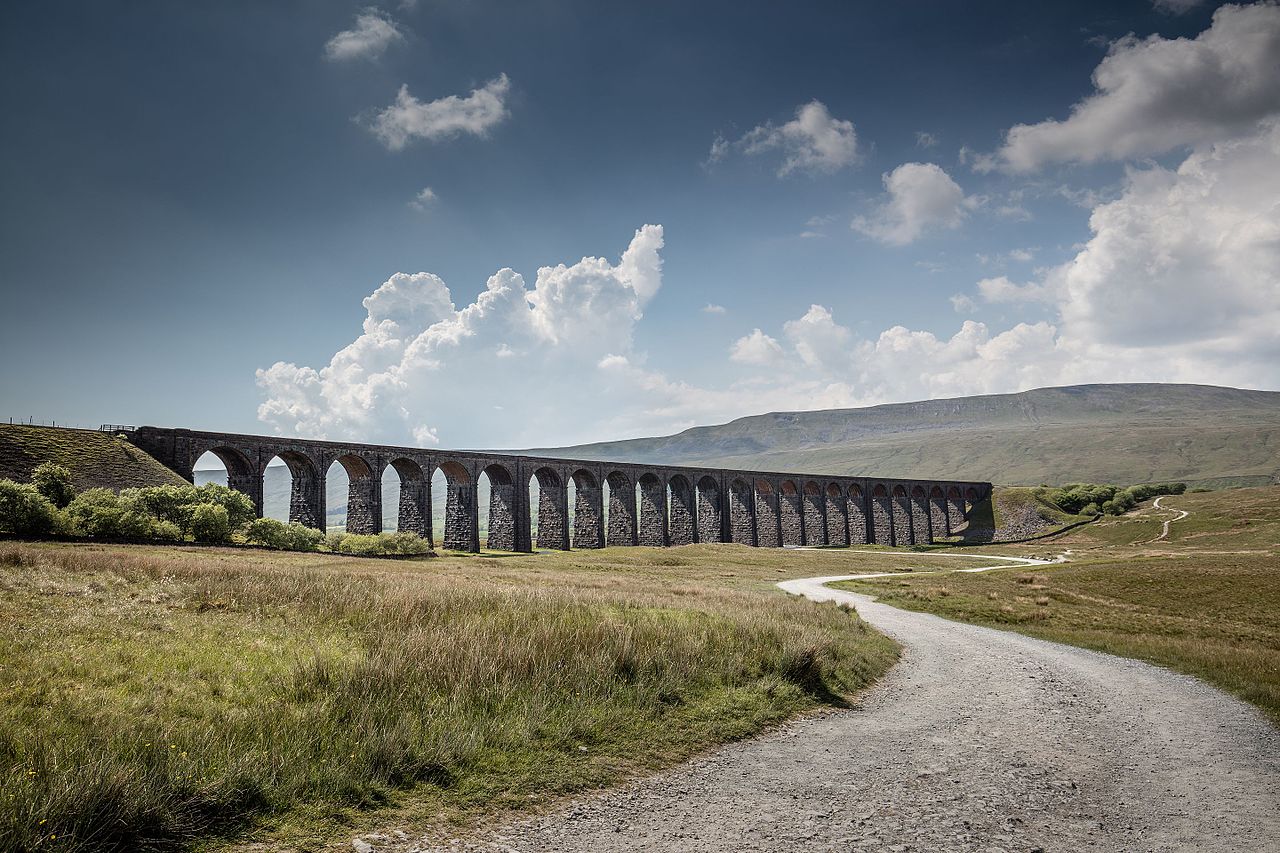
Historic England dates the Batty Moss, or Ribblehead, viaduct to 1870–1874 and records its twenty-four arches. A photograph of the crossing captures the completed railway. The National Park’s material about construction workers adds another layer: the temporary settlements and archaeological traces associated with the people who built it.
Use the National Park’s ground-level access guidance and interpretation to widen the visit beyond the outline of the arches. The relationship between the railway alignment, the valley and the working landscape matters. Archaeological traces are not souvenirs, and an apparent line across open land should not be substituted for the published visitor route.
The railway deck is outside this visit. A heritage designation does not make an operational structure available for walking, and our rail-heritage category includes both former and still-used infrastructure. Check the route’s surface information and conditions when choosing how far to go; a record point is not a promise of a step-free entrance.
- Historic England — Batty Moss Railway Viaduct ↗ · reviewed 2026-09-13
- Yorkshire Dales National Park — Ribblehead access guide ↗ · reviewed 2026-09-13
- Yorkshire Dales National Park — construction workers ↗ · reviewed 2026-09-13
Thornton and Stanley Ferry: what does the crossing carry?
Bradford Council and Sustrans publish the Great Northern Railway Trail across Thornton Viaduct. Here the documented visitor experience is on a former railway route, unlike the ground-level view at Ribblehead. The heritage record dates Thornton’s twenty-arch crossing to 1876–1878. Its present trail use changes how a visitor experiences the structure without erasing its original purpose.
The trail leaflet is route evidence, not a live closure service. Follow current signs and do not extend the walk onto another railway structure simply because it looks connected on the map. The access status belongs to the named route.
Stanley Ferry presents a different load: a navigable channel of water. The detailed listed entry dates the iron aqueduct to 1837–1839 and names George Leather. Experience Wakefield’s walking map provides a public viewing context. Compare the visible arrangement with a railway viaduct, but keep clear of working canal facilities and workshops. A walking resource does not authorise inspection of every piece of machinery nearby.
- Bradford Council / Sustrans — Great Northern Railway Trail ↗ · reviewed 2026-09-13
- Historic England — Thornton Railway Viaduct ↗ · reviewed 2026-09-13
- Historic England — Stanley Ferry listed aqueduct ↗ · reviewed 2026-09-13
- Experience Wakefield — Stanley Ferry walk ↗ · reviewed 2026-09-13
Standedge and Elsecar: movement can mean very different things
At Standedge, the operator’s boat trips offer the relevant underground experience. Do not confuse a booked canal trip with a pedestrian right to enter the tunnel or with access to adjoining railway tunnels. The accessibility information matters before booking: boat spaces and approach conditions are separate questions, so check both with Canal & River Trust.
Elsecar’s Newcomen engine was used for pumping. That is a different function from the winding machinery at a colliery that raised loads through a shaft. Ask what moved, where the power went and what problem the machine solved. Those questions prevent a large engine from becoming just an impressive object without a job.
The heritage centre’s general opening is not a guarantee of an engine demonstration. Our record separates centre access from the specific machinery experience and flags the need to check the programme. This distinction is essential wherever a large attraction contains independently managed or intermittently opened components.
- Canal & River Trust — Standedge Tunnel ↗ · reviewed 2026-09-13
- Canal & River Trust — Standedge accessibility ↗ · reviewed 2026-09-13
- Elsecar Heritage Centre — visiting ↗ · reviewed 2026-09-13
- Elsecar Heritage Centre — then and now ↗ · reviewed 2026-09-13
Read the exceptions before setting out
At Leeds Industrial Museum, the operator reports works affecting the main car park and says the engine shed and locomotives are unavailable. The wider museum can still be a destination, but a page for the listed drying-house and engine-shed component must not advertise full access just because the museum is open.
York Cold War Bunker has a different limitation: English Heritage explicitly lists an operational closure on 12–13 September 2026, the date of this review. Its normal guided-tour model should not override that notice. We record the closure and require a fresh calendar check; the page will not automatically announce reopening when those dates pass.
Goathland illustrates an evidence problem rather than a simple closure. The statutory goods-shed date and the railway’s tearoom account disagree. Until the exact building relationship is resolved, that enriched record remains excluded from search indexing. A useful guide can say what is known while refusing to turn an unresolved identity question into a confident visitor recommendation.
- Leeds Museums and Galleries — Leeds Industrial Museum ↗ · reviewed 2026-09-13
- English Heritage — York Cold War Bunker ↗ · reviewed 2026-09-13
- North Yorkshire Moors Railway — Goathland Station ↗ · reviewed 2026-09-13
- Historic England — North York Moors Railway Goods Shed At Goathland Station ↗ · reviewed 2026-09-13
Evidence and further reading
Researched from the linked official records and visitor sources on 13 September 2026. Desk research, not a field inspection. Access notices describe the evidence at that date; check operators before travel. The 8 records below are a selected reading list, not a complete inventory.
- The former Elsecar New Colliery, including the Elsecar Newcomen Engine — 1004790
- Cold War period Royal Observer Corps Group Headquarters, Howe Hill — 1019439
- Batty Moss Railway Viaduct — 1132228
- Stanley Ferry aqueduct — 1005773
- Thornton Railway Viaduct — 1151855
- Entrance Portal To Standedge Canal Tunnel — 1266901
- Drying House Range And Attached Engine Shed At Armley Mills — 1255757
- North York Moors Railway Goods Shed At Goathland Station — 1295758
Historical and interpretive claims refer to the linked records. Source licences and attribution.